
Nutritional and beneficial ingredients

By Kimberlee J. Burrington,
Contributing Editor, Food Product Design
Contents
Providing structure and nutrition
The deal with dairy
Value of soy
Egging ‘em on
Alive and viable
Nutty ideas
Fruitful benefits
Favorable fats

Have you ever taken a closer look at some of the ingredients that you typically
formulate with from day to day? Most of the time, product designers
search for ingredients that improve the usual attributes, like flavor,
texture or appearance. Most food formulators turn to the typical categories
of ingredients that add humectancy, provide structure, promote browning, bind water, improve flavor or add visual appeal — just to name a few.
But, today, because added value helps differentiate products, factoring
in an ingredient's health benefits helps to increase a product's value
and pique customer interest.
Many ingredients may have similar functions, even when the ingredients come from different sources. What can impact selection? Other than cost and quality, one of the most popular properties peddled in the lobbies of food manufacturers today is nutrition. It seems that every ingredient ever developed has some sort of nutritional spin to it. Many have always been on the "good for you" list and are even on the "really good for you" list now that they have been put through a few more clinical trials. Others have fallen off the "good for you" list only to return again. The rest have always been a part of food products, but now they can be isolated and added at even higher levels. Here is a look at how they function in food formulation, along with the latest on the nutrition and health benefits they deliver to add value to the finished product.

Providing structure and nutrition
When it comes to ingredients that contribute to the basic structure and texture
of a food application, protein ingredients rank high in importance.
The food scientist can find a range of protein-based ingredients with
their origins from either plants or animals. Plant sources of protein
ingredients often include wheat, soy, rice and oats. The main animal
sources used for functional food ingredients are milk and eggs. Much
of the recent news on the nutritional benefits of proteins has focused
on the ingredients derived from milk, soy and egg.
The ingredients derived from these sources have similar functionalities in food applications, such as gel formation, emulsification, whippability, water-binding and solubility. Each ingredient performs these at varying levels. Egg white tends to afford the best whipping, while soy proteins bind water well, whey proteins are highly soluble and caseins make good emulsifiers.
Nutritionally, they all provide good sources of protein, so depending on finished product requirements, they can increase a product's protein quotient. They all measure up a little differently depending on the type of protein-quality scoring method used: biological value (BV), protein efficiency ratio (PER), net protein utilization (NPU), protein digestibility or protein digestibility corrected amino acid score (PDCAAS). The PDCAAS tends to be used most frequently in the food industry. While the other methods are based on the growth of rats, the PDCAAS compares the amino-acid composition of a dietary protein with a reference amino-acid pattern, assumed to reflect humans' nutritional requirements. If 100% of the amino-acid requirements are met in the diet, the PDCAAS score is 1.00. Egg white, casein and soy protein isolate score a 1.00; whey proteins actually exceed this score.
"Whey protein isolate has a score of 1.14 on the protein digestability corrected amino acid score," says Laurie Nelson, applications manager, Davisco Foods International, Inc., Eden Prairie, MN. This difference in score takes into account the amino acids that are in excess of the requirements of the human body. The essential amino acids account for about 60% of whey's total protein content. Whey proteins contain almost 26% of the branched-chain amino acids (BCAA), leucine isoleucine and valine. BCAA directly supply energy to the skeletal muscles during intense exercise, instead of first being metabolized through the liver like the other amino acids. Whey proteins are also a good source of the sulfur-containing amino acids, cysteine and methionine. These amino acids maintain antioxidant levels in the body and are thought to stabilize DNA during cell division

The deal with dairy
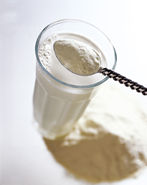
Whey proteins are an important component of many different dairy ingredients.
The majority of the health benefits of whey ingredients focus on the
proteins. As a result, if a food formulator is interested in health
benefits, they should look to the higher-protein products.
Whey-protein products containing 80% protein are called whey protein concentrate 80% (WPC-80), while products containing greater than 90% protein are considered whey protein isolates (WPI). Both of these ingredients are commonly found in sports bars, drinks and meal-replacement beverages. Besides providing an excellent source of all essential amino acids, athletes choose these proteins for their quick absorption and ability to repair muscle. "Body builders who use sports drinks are interested in the amino-acid profile of the whey protein isolates used and the quantities of the protein fractions, immunoglobulins and glycomacropeptide," says Nelson. In addition, these whey protein fractions provide some interesting health benefits of their own.
Most whey protein ingredients contain glycomacropeptide and immunoglobulins, as well as the proteins, lactoferrin, lactoperoxidase, lysozyme, folate-binding protein and induced bioactive components. They exist at varying levels in ingredients depending on the original milk composition, cheese-making procedure and processing techniques used. A WPI manufactured by ion exchange tends to retain less calcium, phosphorus, potassium and more sodium than a microfiltered version. A microfiltered WPI will also contain the glycomacropeptide fraction, whereas one manufactured by ion exchange will not.
Glycomacropeptide, immunoglobulins, lactoferrin and lactoperoxidase are commercially available as isolated proteins. Glycomacropeptide has been shown to stimulate the body's synthesis and release of cholesystokinen, a compound that plays a role in the regulation of digestion and functions as an appetite suppressant. Immunoglobulins may have applications for enhancing immunity and treatments for AIDS-related symptoms such as cryptosporidia diarrhea.
Lactoferrin has the ability to bind free iron, enabling it to function as an antibacterial agent in the body. The action of pepsin and other specific proteases converts lactoferrin into lactoferricin, which possesses broad-spectrum activity against pathogenic bacteria and yeast. Lactoferrin enhances the immune system and promotes intestinal cell growth. Lactoferrin ingredients can be manufactured with varying levels of iron to provide different bioactive properties. The lowest levels of iron can reduce the growth of gram-negative bacteria and the highest levels bind and transport iron. Lactoperoxidase is also an effective antibacterial protein.
Besides fractionating whey into individual proteins, whey protein ingredients like WPC and WPI can undergo controlled enzyme hydrolysis of the proteins to break them up into smaller fragments. "Hydrolysis of the whey proteins not only improves the protein digestibility, but can also improve the texture of a high-protein energy bar," says Nelson. Generally, a specific level of hydrolysis can be targeted for a specific functional benefit. As the level of hydrolysis increases, the digestibility, absorption and retention of nitrogen increases, and the allergenicity of the protein decreases.
Another health benefit of hydrolyzed whey proteins is its possible link to reduced hypertension. "Ingestion of a hydrolyzed whey protein isolate with 6% hydrolysis of the protein has been shown to reduce blood pressure in hypertensive rats," says Nelson. The enzymatic treatment of the proteins produces anti-hypertensive peptides that suppress angiotensin-converting enzymes (ACE), a hormone that causes blood vessels to constrict, thus reducing hypertension. Clinical studies are underway to prove this same effect in humans.
In addition to protein, whey ingredients supply milk minerals. Dried whey, containing a calcium level of 7.7 mg per gram, or modified whey ingredients with increased calcium contents, can serve as fortification ingredients. Isolation of calcium and other minerals in whey has created another whey-derived ingredient with bioavailable minerals that fits well into food fortification. "Some modified whey ingredients contain a higher level of protein, calcium and phospholipids than dried whey, which provide emulsification and improved mouthfeel, as well as calcium fortification," adds Nelson.
Value of soy
Soy ingredients have attracted a lot of attention in the health-benefit arena. Soy-derived
ingredients include soy flour, texturized soy protein, texturized soy
flour, textured soy protein, soy protein concentrate, soy protein isolates
and isoflavones.
Soy flour is used widely in the baking industry to improve crust color, extend shelf life and to aid fermentation. It contains about 50% protein and the highest level of isoflavones of the soy-derived ingredients. The sugars found in soy flour include soluble carbohydrates like sucrose, stachyose, raffinose and insoluble carbohydrates (dietary fiber). The insoluble carbohydrates are oligosaccharides, thought to promote beneficial bacteria growth and aid digestion.
Twenty years ago, texturized soy products were used to extend meat. Their strong beany flavors prompted development of soy protein concentrates. Produced by extracting the sugars from soy flour, soy protein concentrate contains about 70% protein. Soy protein concentrates cause less gas and have a blander flavor than soy flour. Vegetarian patties are typically formulated with soy protein concentrate. These concentrates have good emulsification and fat-binding characteristics and help to contribute to the soy protein health claim: "Twenty-five grams of soy protein a day, as part of a diet low in saturated fat and cholesterol, may reduce the risk of heart disease."
Soy protein isolate, at 90% protein, is the most highly concentrated form of soy protein. Isolates are often used in infant formula, meal-replacement and weight-loss beverages, smoothies and soymilk where, depending on their molecular configuration, they can supply viscosity as well as nutrition.
Soy proteins act as more than a functional protein or basic vegetable-based protein source. They are high in the amino acids glycine and arginine, which decrease the amount of cholesterol manufactured by the body and lower insulin levels. Soy proteins are thought to stimulate the liver to remove more cholesterol, especially LDL cholesterol, from the blood.
Other than their proteins, the soy compounds linked to health benefits include isoflavones, phytic acid, saponins and protease inhibitors. Isoflavones are considered phytoestrogens because their structure is similar to estrogen (estrodial). The three major isoflavones in soy are genistein, daidzein and glycitein. Their dietary function focuses on their estrogenic activity. Isoflavones act as estrogens and anti-estrogens which make them well-suited for the diets of post-menopausal women. The estrogen effect may help reduce the symptoms of menopause, while the anti-estrogen effect reduces the potential formation of estrogen-dependent cancers such as breast, ovarian and endometrial. Isoflavones provide improved expansion and contraction of the arteries and help maintain bone density. Genistein may function as an angiogenesis blocker, inhibiting the growth of new blood vessels that feed malignant tumors. Commercial isoflavone ingredients can be added to foods to ensure desired levels of consumption.
Egging ‘em on
Eggs were probably one of the first multifunctional ingredients. They are
well-known for their whipping, gelling and emulsification properties,
in addition to their high-quality protein. The proteins exhibit film-forming
abilities, plus whole egg can improve appearance in the form of an egg
wash and can contribute desirable flavor notes to desserts and baked
products.
Eggs are natural foods with extra nutritional benefits. Despite their previously suspected role in promoting high cholesterol, nutritionists now agree that moderate egg consumption has little to no negative effect on cholesterol levels. As a bonus, egg yolk has one of the highest concentrations of the carotenoids lutein and zeaxanthin. These have a potential role in delaying age-related macular degeneration (ARMD). Studies show a direct link between carotenoid intake, plasma concentrations and macular pigment density. Carotenoids also act as an antioxidant to protect the retina from phototoxic damage. Eggs also contain B vitamins, folic acid, vitamins, A, D and E and iron.
Alive and viable
As long as the food industry has manufactured cultured products, we have been aware of "good bacteria" and "bad bacteria."
The cultures, or "good bacteria," added to yogurt help form
the desired aroma, acidity, flavor and texture. Varying the cultures
allows different effects in the finished product. Now science has proven
that those bacteria have other functions as well.
A probiotic, meaning "for life," is a viable organism, or a component of one, that poses a benefit when ingested by the host. "The primary benefit of probiotics in the diet is maintenance of intestinal health," says Marilyn Stieve, marketing manager, cultured dairy products, Chr. Hansen, Inc., Milwaukee. To get a better understanding of what good intestinal health is, take a look at the intestinal environment.
More than 1014 microorganisms make up the intestinal flora, which play a major role in the alimentary health of humans. The distribution of flora in numbers and species is non-homogeneous throughout the intestinal tract. The mouth usually has 109 microorganisms per gram saliva. Most of the bacteria from the saliva and from ingested food are killed in the stomach. Typically less than 0.01% of the ingested microorganisms survive passage through the stomach. In the duodenum, or upper part of the intestine, there are approximately 104 microorganisms per ml with only the oxygen-tolerant ones showing metabolic activity. Next in line, the ileum, has 105 to 106 microorganisms, primarily Lactobacilli, Bacteroides, Enerococci and Bifidobacteria. The colon wins the prize for having the largest population of all, 1011 to 1013 microorganisms per gram. You can add the anaerobes Clostridia and Peptostreptococci to the above list for inhabitants of the colon. These are all the microorgansims that should have permanent residence in the intestinal system.
The level of "good" bacteria, or normal flora, such as Lactobacilli or Bifidobacteria, changes from day to day due to stress, infection, food intake and lifestyle. A daily intake of probiotics helps to secure balance in the intestinal system. "We recommend a daily intake of at least 108 probiotics, which corresponds to a daily intake of 100 ml of a product with 106 colony-forming units per gram," says Stieve. Organisms that are commonly found in probiotics are from the genera Lactobacillus, Bifidobacterium, Streptococcus, Enterococcus and Bacillus. "Current probiotic applications common in the United States include fluid milk, yogurt and dietary supplements," she continues. Other applications include frozen yogurt, cheese, butter, fermented milks and infant formula.
We have always known that yogurt is a "good for you food," but much of that opinion focused around the fact that it is low in fat and high in protein and calcium. Not until recently have pharmacists and pediatricians suggested to a parent whose child is on antibiotics for an ear infection, that yogurt can counteract the effects of the antibiotics on the intestinal tract. In addition to reducing the side effects of antibiotics, probiotic research has reported reduced diarrhea, reduced yeast infections, improved lactose tolerance, lower cholesterol and enhanced immunity.
"Clinical studies conducted with Lactobacillus casei and Lactobacillus reuteri have shown benefits in the area of immune stimulation," says Stieve. They are believed to boost the immune system by increasing the activity of phagocytes, the cells that ingest dead and invading cells.
Other ingredients combined with the organism of choice will aid in ensuring the viability of the probiotics added to an application. Prebiotics are ingredients that supply health benefits alone or in combination with probiotics. A prebiotic is a nutrient that is utilized by the probiotic, thus promoting the growth of that organism. Prebiotics are non-digestible food ingredients that may include some starches, dietary fibers, polyols, inulin and oligofructose.
"Inulin and oligofructose are the only proven prebiotics based on clinical studies," says Mark Izzo, Ph.D., director science and technology, Orafti Active Food Ingredients, Malvern, PA. Because inulin and oligofructose are dietary fibers, they also provide the nutritional benefits normally associated with dietary fibers. Studies indicate that they reduce triglycerides and may have a protective effect against some forms of cancer. "Inulin and oligofructose provide nutritional benefits backed by sound science based on human studies," says Kathy Niness, vice president, marketing sales North America, Orafti Active Food Ingredients. "Inulin and oligofructose are a completely natural part of the human diet," says Izzo.
Natural sources of inulin and oligofructose include onions, garlic, bananas, artichokes and chicory. The amount of inulin in a large banana is approximately 1 gram. In a typical diet, we might ingest 1 to 4 grams of inulin per day. Experts at Orafti recommend 8 grams per day of inulin or oligofructose to reap the nutritional benefits of these two fibers. "The consumer messages attached to these ingredients include good digestive health and enhanced calcium uptake, in addition to a good fiber source," says Niness.
Both ingredients have been shown to increase calcium absorption by the body and improve bone-mineral density. "We are now beginning to develop inulin products targeted at specific health benefits," says Izzo. One product has been developed specifically to enhance calcium absorption. It combines different chain lengths of inulin to provide fermentation along the entire length of the colon, thus providing even more sites for absorption of calcium, according to Izzo. Besides their nutritional benefits, they are easy to use in formulation. "These ingredients do not provide any off-flavors, do not add viscosity and form clear solutions," says Niness.
Formulating for fat and calorie reduction, sugar substitution or fiber enrichment is easily done with inulin and oligofructose. Oligofructose provides some advantages in a higher level of sweetness than inulin. They are well-suited for cereals, yogurt, fluid milk, breads, confections and other dairy applications, providing multiple functionalities. "Inulin and oligofructose can help extend the shelf life of nutrition bars by lowering the water activity and binding water to maintain a soft texture," says Niness.

Nutty ideas
Nuts have gone through some ups and downs in perceived health benefits. Back
when fat was "bad for you," nuts also fell into the same category
because of their high fat content. We often think about adding nuts
for visual appeal and flavor in upscale and indulgent applications,
which only perpetuates the myth that nuts are just a high-fat food.
Nuts, in fact, offer a nice nutritional package. They provide a good source of protein, essential fatty acids, fiber, vitamins and minerals. The list of vitamins and minerals in nuts includes potassium, calcium, magnesium, iron, zinc, copper, vitamin E, riboflavin, niacin, vitamin B6, and folic acid. A comparison of almonds, cashews, hazelnuts, walnuts, Brazil nuts, pistachios, pecans and macadamia nuts shows that almonds rank the highest in terms of nutrient density. Nutrient density is calculated as the average of the percent of Daily Value (DV) per 100 grams for all of the vitamins and minerals listed above, in addition to protein and fiber. The DV is the amount that an individual should consume daily, based on a 2,000-calorie diet, to maintain health.
"Almonds are one of the very best food sources of vitamin E," says Dr. Sam Cunningham, director of research and development, Blue Diamond Growers, Sacramento, CA. Vitamin E is a powerful antioxidant that may help prevent heart disease by preventing oxygen in the blood from combining with LDL cholesterol.
The American Heart Association (AHA) recommends that healthy people get adequate vitamin intakes from eating a variety of foods rather than from supplements. The fat content of almonds, 15 grams of fat in a 1-oz. serving, is a high level. However, a look at the types of fat shows a combination of monounsaturated, polyunsaturated and saturated fats. "The majority of fat in almonds is monounsaturated fat, which has a positive influence on bio-markers for heart disease, such as lowering blood cholesterol," says Cunningham. In fact, 10 out of the 15 grams of fat is monounsaturated. "Not only do almonds have monounsaturated fat and vitamin E, but also calcium, magnesium, manganese, selenium and folic acid, which make almonds an effective tool in formulating a healthy food," he adds.
Almonds and other nuts are also rich in phytochemicals, which are thought to be biologically active compounds. "The polyphenolic compounds in almond skin are very complex flavonoid-type compounds which are strong antioxidants," says Cunningham. Phytochemicals, such as flavonoids and plant sterols, have been associated with the prevention and/or treatment of cancer, diabetes, cardiovascular disease, hypertension and osteoporosis. The flavonoids identified in almonds are caffeic, coumaric, catechin, epicatechin, quecitin, iso-quescitin, kaempferols and naringens. The identified plant sterols are beta-sitosterol and squalene. This helps make almonds and other nuts a healthful addition to cereals, trail mixes, energy bars, snack food mixes, and even nutritional beverages.
Fruitful benefits
Fruit has been forever healthful and colorful. It adds visual appeal to savory dishes as well
as sweet baked goods, and provides consumers with a guilt-free way to
indulge a sweet tooth. As a bonus, fruits have long been recognized
for their nutrient contributions and their role in helping to prevent
vitamin deficiencies. A number of phytochemicals —bio-active, non-nutrient
plant compounds — have been identified in fruits, including flavonoids,
carotenoids and lycopene. Their beneficial effects relate to coronary
heart disease, cancer, stroke and blood pressure. Higher fruit intake
may contribute to weight control, the prevention of macular degeneration
and bone health. Fruits provide significant amounts of antioxidants,
which counteract free-radical formation. Most fruit can act as a significant
source of fiber in the diet.
A 1999 study by the National Institutes on Aging and the USDA documented that blueberries strengthen eyesight, inhibit aging and improve memory. Anthocyanidins — the flavonoids found in blueberries, blackberries, cranberries, cherries and grapes — produce blue, purple or red colors. Cranberries also contain proanthocyanidins, which are beneficial for urinary-tract health. Apple skin and flesh are good sources of flavonoids and polyphenols, both strong antioxidants.
Favorable fats
Like nuts, fats and oils have endured many ups and downs in their developmental career.
"Healthy" and "fat" have only recently showed up
in the same sentence. In recent years, "healthy" fats have
included anything from a non-tropical source to margarine to polyunsaturated
to non-hydrogenated to milkfat to medium-chain triglycerides. Just when
you think science has established a fat as healthy or not, the studies
and opinions change. The most recent topics focusing on fats and oils
are genetically modified oils and trans fatty-acid labeling. A more
in-depth analysis is given in the June 2000 article, Fats and Oils 2000:
Challenges and Opportunities, in Food Product Design.
Trans fatty acids (TFA) are an issue because recent clinical studies have found a relationship between dietary TFA, and elevated levels of total cholesterol and LDL cholesterol relative to control diets. The HDL cholesterol remained unchanged or reduced in this study. Both partially hydrogenated vegetable oils and animal fats contain TFA. The trans isomers formed during partial hydrogenation are in different positions along the fatty-acid backbone than those occurring naturally in animal fats. Fatty acids can be saturated or unsaturated, depending on the number of hydrogen bonds. Saturated fatty acids cannot accept any more hydrogen atoms. Unsaturated fatty acids can accept two hydrogen atoms to yield a monounsaturated fat, or more hydrogen atoms, resulting in a polyunsaturated fat.
Melting point and oxidative stability rises with increases in chain length and saturation. Fats that are liquid at room temperature contain a large portion of unsaturated triglycerides, such as vegetable-seed oils from canola, corn, cottonseed, olive, peanut, safflower, soybean and sunflower. Fats that are semi-solid at room temperature, such as cocoa butter, lard, palm, palm kernel and tallow, consist of at least 40% saturated fatty acids.
The hydrogen atoms in most naturally occurring vegetable fats and oils are in the cis configuration. Isomerization occurs during hydrogenation, converting the cis isomer into a trans isomer. Isomerization also increases the melting point of a fat; and enhances its functionality.
There are ways to produce a higher melting-point fat, such as a bakery shortening, with very little trans fatty acids. "If you fully hydrogenate an oil, you eliminate the double bonds so there are no trans fatty acids," says Roy Johnston, director of marketing, Humko Oil Products, Memphis, TN. "One to two percent of trans fat is created by the deodorizing process so zero trans can not be achieved in the shortening. Blending sunflower oil with a fully hydrogenated soybean oil yields a shortening with a minimum of trans fat, allowing many food applications to make a trans fat claim."
The AHA recommends that "naturally occurring unhydrogenated oil should be used when possible and attempts made to substitute unhydrogenated oil for hydrogenated or saturated fat in processed foods. Additionally, the recommendation to substitute softer for harder margarines and cooking fats seems justified." If trans isn't an issue, but there is an interest in some new oils, enhancements in functionality, oxidative stability and nutrition may be the answer.
Hybridization and genetic modification have produced some functionally enhanced oilseeds. "Commodity sunflower oil is gradually changing from a low oleic-acid content at a level of 19% to 20%, to a crop that has an oleic content of 55% to 65%, giving it an enhanced oxidative stability, especially for frying applications," says Johnston. Commercial introductions of high-oleic canola and soybean oils have also been made. Due to the special fatty-acid requirements developed into these enhanced oils, it is necessary to try and preserve their identity. "An identity-preserved oil can be followed from the field to the finished product, and proven not to be mixed with a similar crop at any stage of processing or storage," he says. It may be difficult to process these oils economically within an identity-preserved environment because the initial demand for them may be low.
While not currently considered a health issue, if genetic modification becomes a concern for consumers, they can find alternatives. "Some oils by their nature are GMO-free, such as peanut oil and sunflower oil, because biotechnology has not yet resulted in commercially grown varieties of these crops. These oils are excellent for frying applications and can meet the functional requirements of many bakery applications when hydrogenated," says Johnston.
Additional nutritional spin on fats and oils comes from the structured lipids, plant sterols and milkfat. Structured lipids can be formed by combining glycerol and fatty acids into a triglyceride using esterification. Attaching medium-chain fatty acids onto the glycerin molecule forms medium-chain triglycerides. "Medium-chain triglycerides (MCTs) have short-chain fatty acids consisting primarily of C-8 fatty acids, which are easily digested and provide a quick energy source," says Johnston. MCTs have a caloric value of 7 calories per gram vs. fat's typical 9 calories per gram, due to their faster metabolic pathway. Nutritional beverages and bars are excellent applications for these lipids. They have useful functional properties as well. "MCTs have good moisture-barrier properties, are good release agents, and make good carriers for colors and flavors," he adds.
Plant sterols are effective at serum-cholesterol reduction, especially when ingested as refined vegetable oils rather than isolated components. Looking at phytosterol levels in refined vegetable oils shows an increasing amount from peanut oil, olive oil, soybean oil, cottonseed oil, safflower oil, sesame oil and corn oil, up to the highest amounts found in rice-bran oil. The plant sterols, beta-sitosterol, campesterol and stigmasterol, are the most common.
Another plant-derived oil compound, tocotrienol, is found in palm oil, rice-bran oil and barley. In animal studies, tocotrienols are shown to be effective cholesterol-reducing agents, antioxidants and tumor suppressers.
Milkfat is the richest source of conjugated linoleic acid (CLA). Linoleic acid is an 18-carbon polyunsaturated omega-6 fatty acid, with double bonds at the cis-9 and cis-12 positions. In conjugated linoleic acid, the double bonds are separated by only one single bond. Of the eight possible isomers, the cis-9, trans-11 version is the one most common to foods. CLA — found mainly in dairy products and ruminant tissue — has a number of health benefits. Most studies to date have been conducted with animals. According to recent studies, CLA has anti-carcinogenic properties; it lowers cholesterol while also reducing the size of lesions found in arteries. CLA functions by lowering the quantity of fats in the bloodstream and by preventing fats from adhering to artery walls. Supplementation with CLA seems to improve the ratio of lean body mass to fat and reduces body fat especially on the abdomen. CLA is not necessarily a weight-loss agent but rather seems to be a weight-gain deterrent. Other components of milkfat that have shown anti-carcinogenic properties are sphingomyelin, butyric acid and ether lipids.
These are some of the more prevalent ingredients that add value though improved health. Though the list of ingredients with both functional and health benefits grows daily, little can be said about daily requirements or recommended levels. Most product developers would prefer to state a claim for that nutraceutical ingredient they are formulating with. For now, consumer perception supported by published clinical studies of these ingredients will have to suffice. Still, in the meantime, we can all take advantage of the multiple benefits these ingredients supply.
Kimberlee J. Burrington received her B.S. and M.S. degrees in food chemistry from the University of Wisconsin-Madison. With over 16 years of experience, her industry background is in bakery and dairy.
• Photo: Blue Diamond Growers
• Photo: Pacific Northwest Canned Pears
• Photo: Orafti Active Food Ingredients
• Photo: Cherry Marketing Institute
• Photo: Dairy Management, Inc
© 2000 by Weeks Publishing Company
Weeks Publishing Company
3400 Dundee Rd. Suite #100
Northbrook, IL 60062
Phone: 847-559-0385
Fax: 847-559-0389